Straightening your teeth is not just something people consider during their teenage years. Many adults explore orthodontic treatment because they want to improve their smile, address crowding or spacing, or correct bite problems that have developed or become more noticeable over time.
Two common treatment options are traditional braces and clear aligners. Both gradually move teeth into improved positions, but they differ in appearance, daily maintenance, removability, and the types of orthodontic problems they can address.
According to the American Association of Orthodontists, braces and clear aligners can both be effective orthodontic treatments. However, neither option is automatically appropriate for every patient. The recommended approach depends on the complexity of the tooth movements, the patient’s oral health, and their ability to follow the treatment plan.
For a detailed comparison, visit the American Association of Orthodontists’ guide to braces and clear aligners. American Association of Orthodontists
For adults considering clear aligners or braces in Anaheim, understanding how each treatment works can help make the decision easier.
Why Do Adults Consider Orthodontic Treatment?
Orthodontic treatment is often associated with improving the appearance of a smile, but its benefits can extend beyond cosmetic concerns.
Adults may seek treatment because of:
- Crowded or overlapping teeth
- Gaps between teeth
- Teeth that have shifted over time
- Bite alignment concerns
- Difficulty cleaning certain areas between teeth
- Uneven tooth positioning
- A desire to improve their smile
Some adults never received orthodontic treatment when they were younger. Others previously wore braces but experienced tooth movement after they stopped wearing their retainers.
Regardless of the reason, age alone does not determine whether someone can receive orthodontic treatment.
The health of the teeth, gums, and supporting bone is more important when evaluating treatment options.
What Are Traditional Braces?
Traditional braces use brackets attached to the teeth and wires that apply controlled forces to move teeth gradually.
The brackets remain attached throughout treatment, while the wires and other components are adjusted according to the treatment plan.
Braces can address many orthodontic concerns, including:
- Crowded teeth
- Rotated teeth
- Gaps between teeth
- Certain bite problems
- More complicated tooth movements
Because braces remain attached to the teeth, patients do not need to remember to put them back in after eating or brushing.
However, they require careful cleaning around brackets and wires.
What Are Clear Aligners?
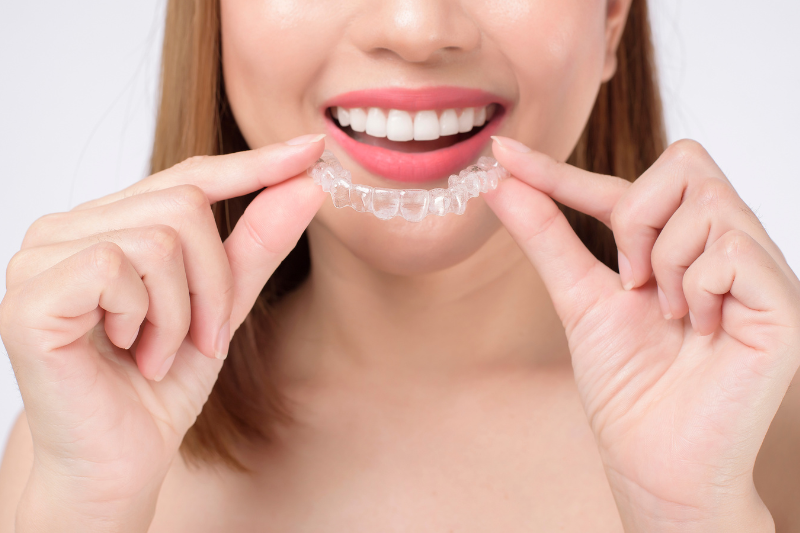
Clear aligners are removable orthodontic appliances made from transparent plastic-like material.
Each aligner is custom-designed to fit over the teeth and apply controlled pressure.
Patients wear a series of aligners that gradually move their teeth toward the planned positions.
Invisalign is one recognized brand of clear aligner treatment.
Unlike traditional braces, aligners can be removed for eating, drinking beverages other than water, brushing, and flossing.
Their transparent appearance makes them less noticeable than conventional metal braces.
However, their effectiveness depends heavily on consistent wear.
Clear Aligners vs. Braces: What Are the Main Differences?
Although both treatments aim to improve tooth alignment, their daily requirements differ.
| Feature | Traditional Braces | Clear Aligners |
|---|---|---|
| Appearance | Visible brackets and wires | Transparent, less noticeable trays |
| Removable | No | Yes |
| Eating | Certain food restrictions | Removed during meals |
| Brushing | Requires cleaning around brackets and wires | Removed for normal brushing |
| Flossing | May require specialized tools | Usually easier without the trays |
| Wear compliance | Fixed to teeth | Requires consistent daily wear |
| Adjustments | Periodic orthodontic adjustments | Progression through aligner sets |
| Treatment suitability | Can address a broad range of orthodontic problems | Suitable for many cases, depending on complexity |
The American Association of Orthodontists emphasizes that treatment suitability depends on the individual orthodontic problem rather than appearance or convenience alone. American Association of Orthodontists
Are Clear Aligners Less Noticeable Than Braces?
For many adults, appearance is an important consideration.
Traditional metal braces are visible when speaking or smiling. Although tooth-colored brackets may be available in some orthodontic treatment plans, wires and other components can still be noticeable.
Clear aligners are made from transparent material that fits closely over the teeth.
They are designed to be relatively discreet, which may appeal to adults who regularly attend meetings, work with customers, or prefer a less noticeable orthodontic appliance.
However, clear aligners are not completely invisible.
Some treatment plans require small tooth-colored attachments that help the aligners apply the necessary forces.
Are Clear Aligners More Comfortable Than Braces?
Both treatments can cause temporary discomfort because they work by applying pressure to move teeth.
With traditional braces, patients may notice tenderness after the braces are first placed or following adjustments.
Brackets and wires can also temporarily irritate the cheeks or lips.
Clear aligners have smooth surfaces and do not use conventional brackets and wires.
However, patients may still experience pressure or tenderness when switching to a new aligner.
Neither treatment should cause constant severe pain.
If discomfort becomes significant or persistent, the dental provider should evaluate the problem.
How Many Hours a Day Must You Wear Clear Aligners?
Clear aligners must be worn consistently to work as planned.
The American Association of Orthodontists explains that aligners typically need to be worn for approximately 20–22 hours per day, depending on the provider’s instructions and treatment plan. American Association of Orthodontists
That means they generally remain in place throughout most of the day and while sleeping.
Patients usually remove them only when:
- Eating meals
- Drinking beverages other than water
- Brushing
- Flossing
- Cleaning the aligners
Removing aligners frequently or leaving them out for extended periods may interfere with planned tooth movement.
For adults with unpredictable schedules, this is an important consideration.
Can You Eat Normally With Clear Aligners?
One practical advantage of clear aligners is that they are removable during meals.
Patients can generally continue eating their usual foods without worrying about damaging brackets or wires.
However, aligners should be removed before eating.
Drinking sugary or acidic beverages while wearing aligners can also create problems because liquid may become trapped against the teeth.
Water is generally the appropriate beverage while aligners are in place.
After eating, patients should clean their teeth before reinserting the aligners whenever possible.
What Foods Should You Avoid With Traditional Braces?
Traditional braces require additional care when eating.
Hard, sticky, and chewy foods can damage brackets or wires.
Patients may need to avoid or modify foods such as:
- Hard candies
- Sticky caramels
- Chewing gum
- Popcorn with hard kernels
- Whole nuts
- Very crunchy foods
- Foods that require biting forcefully with the front teeth
Some foods can still be enjoyed when cut into smaller pieces.
Your orthodontic provider can explain which foods are appropriate for your specific appliances.
Which Treatment Is Easier to Keep Clean?
Clear aligners can make routine brushing and flossing more straightforward because the trays are removable.
Patients can clean their teeth without working around brackets and wires.
However, the aligners themselves also require regular cleaning.
Traditional braces require additional attention because plaque and food particles can accumulate around orthodontic components.
Patients with braces may benefit from specialized flossing tools, interdental brushes, or other cleaning aids.
Regardless of the appliance, maintaining healthy teeth and gums throughout treatment remains essential.
Are Clear Aligners Faster Than Traditional Braces?
Not necessarily.
It is a common misconception that clear aligners always straighten teeth faster than braces.
Treatment time depends on factors such as:
- Severity of crowding
- Amount of tooth movement required
- Bite relationships
- Complexity of the treatment plan
- Individual biological response
- Patient compliance
- Whether additional treatment stages are needed
Some cases may be completed relatively quickly, while others require a longer treatment period.
The American Association of Orthodontists explains that neither braces nor clear aligners have an automatic speed advantage for every patient. American Association of Orthodontists
An examination and treatment plan are needed before estimating how long orthodontic treatment may take.
Can Clear Aligners Fix Crowded Teeth?
Clear aligners can correct many types of tooth crowding.
They work by gradually moving teeth into planned positions using a sequence of custom-made trays.
However, the suitability of aligners depends on the severity and nature of the crowding.
Some cases may require more complicated tooth movements, additional appliances, or treatment approaches that are better managed with braces.
A professional orthodontic evaluation can determine whether clear aligners are appropriate.
Can Clear Aligners Close Gaps Between Teeth?
In many cases, yes.
Clear aligners may be used to move teeth closer together when spacing is caused by tooth position.
However, gaps can have different causes.
Some result from naturally small teeth, missing teeth, gum problems, or differences between tooth size and jaw size.
If the spacing is related to tooth shape rather than alignment alone, orthodontic treatment may not fully address the cosmetic concern.
Your dentist can explain whether orthodontics, bonding, or another treatment would be appropriate.
Are Traditional Braces Better for Complex Orthodontic Problems?
Traditional braces can be particularly useful when a treatment plan requires more complicated tooth movements.
Because brackets and wires remain attached to the teeth, the provider can apply and adjust forces throughout treatment without depending on the patient to wear removable appliances.
However, clear aligner technology can also address a range of orthodontic problems.
The choice depends on the specific tooth movements required.
A dentist or orthodontist should evaluate the bite, teeth, supporting tissues, and treatment goals before recommending an appliance.
Do Adults Need Healthy Gums Before Orthodontic Treatment?
Yes.
Healthy gums and adequate supporting bone are important considerations before moving teeth.
If a patient has active periodontal disease, the condition may need to be treated and stabilized before orthodontic treatment begins.
An evaluation may include checking:
- Gum inflammation
- Periodontal pocket depths
- Bone support
- Tooth mobility
- Existing dental restorations
- Areas of decay
The purpose is to make sure the teeth and surrounding tissues are suitable for orthodontic movement.
Can You Get Braces or Aligners if You Have Crowns or Fillings?
Many adults have existing dental restorations.
Having fillings or crowns does not automatically prevent orthodontic treatment.
However, the dentist needs to consider how those restorations affect appliance placement and tooth movement.
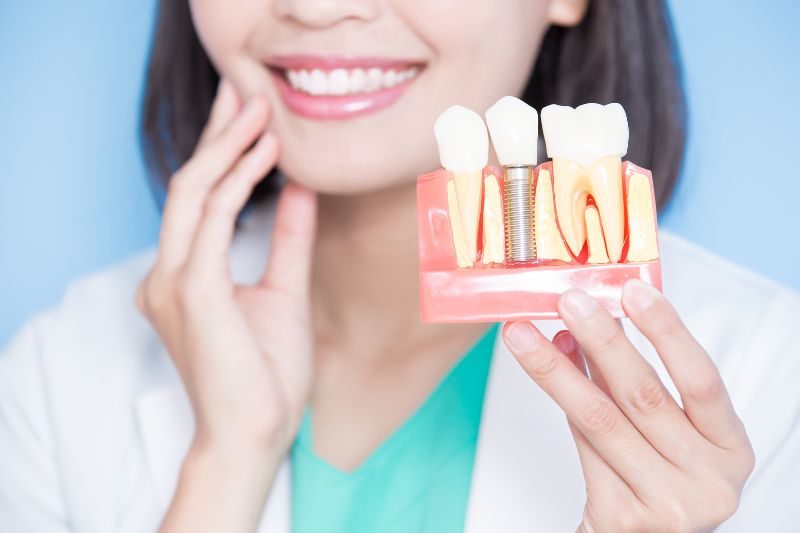
Dental implants require special consideration because an implant is integrated with the surrounding bone and does not move like a natural tooth.
This makes comprehensive treatment planning especially important for adults with existing restorative dental work.
Will You Need a Retainer After Treatment?
Yes, retainers are generally an important part of maintaining orthodontic results.
Teeth can shift after braces or aligners are removed.
A retainer helps maintain their corrected positions.
Retainers may be removable or fixed, depending on the treatment plan.
Patients should follow their provider’s instructions about how often and how long retainers need to be worn.
Stopping retainer use without guidance may allow unwanted tooth movement.
What Should You Expect During an Adult Orthodontic Consultation?
An orthodontic consultation begins with understanding your concerns and evaluating your teeth.
The appointment may involve:
- Reviewing your dental and medical history
- Examining tooth alignment
- Evaluating your bite
- Checking gum and tooth health
- Reviewing existing restorations
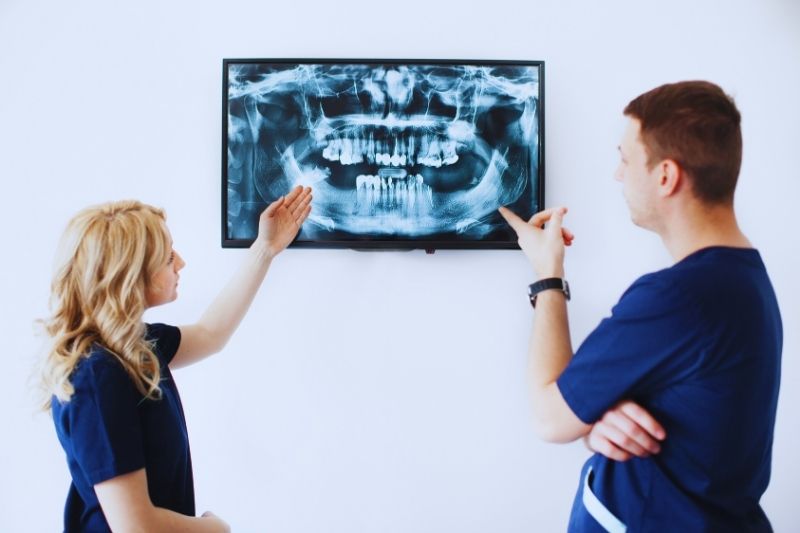
- Taking photographs, scans, or X-rays when appropriate
- Discussing braces and clear aligner options
- Explaining treatment expectations
- Reviewing estimated treatment duration
Not every patient will be a candidate for both treatment options.
The goal is to determine which approach can address the orthodontic problem while fitting the patient’s oral health needs and daily routine.
Adult Orthodontics and Clear Aligners in Anaheim, CA
Dental Aesthetics Professionals offers orthodontic treatment options for adults in Anaheim, including traditional braces and Invisalign clear aligners. Its published orthodontic service information describes treatment for both tooth alignment and bite-related concerns. DAP Dental
For adults considering teeth straightening, the appropriate choice depends on more than whether an appliance is visible.
Clear aligners may appeal to patients who prefer removable, discreet treatment and can consistently follow wear instructions. Traditional braces may be appropriate for patients who prefer fixed appliances or require particular types of tooth movement.
An orthodontic evaluation can help determine which treatment options are suitable for your teeth, gums, bite, and lifestyle.
Learn more about Dental Aesthetics Professionals in Anaheim or call 714-772-3538 to arrange an orthodontic consultation.