Dental X-Rays in Anaheim: Are They Safe and Necessary?
If your dentist recommends dental X-rays during an examination, you may wonder why they are necessary—especially when your teeth feel completely fine.
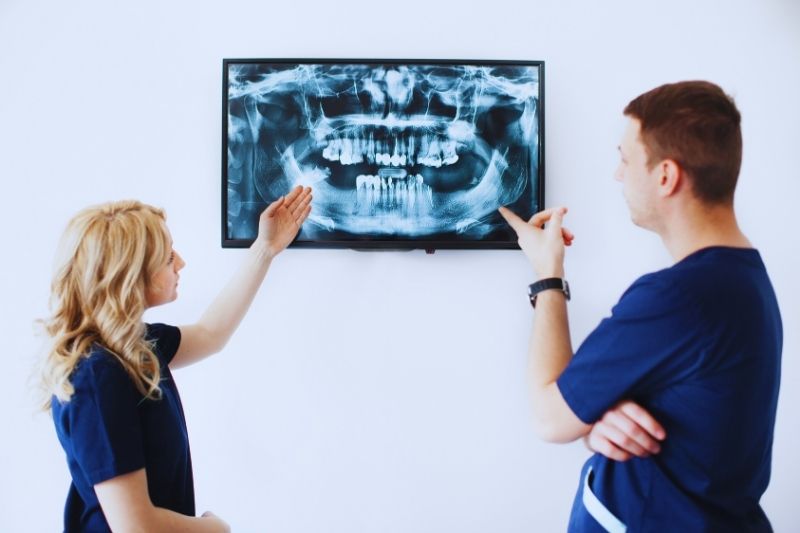
Dental X-rays, also called dental radiographs, provide information that cannot always be seen during a visual examination. They can help a dentist evaluate areas between teeth, tooth roots, supporting bone, developing teeth, and other structures beneath the surface.
The American Dental Association’s current guidance on dental X-rays explains that radiographs should be taken according to each patient’s individual needs rather than on the same schedule for everyone. Factors such as oral health, age, disease risk, symptoms, and dental history help determine whether imaging is appropriate.
For patients seeking dental X-rays in Anaheim, understanding why imaging is used can make this common diagnostic tool easier to approach.
What Are Dental X-Rays?
Dental X-rays create images of teeth and surrounding structures that may not be completely visible during an ordinary dental examination.
A dentist can look directly at the exposed surfaces of your teeth and gums, but some areas are hidden.
Radiographs can provide additional information about structures such as:
- Areas between neighboring teeth
- Tooth roots
- Supporting jawbone
- Developing permanent teeth
- Wisdom teeth
- Certain areas of tooth decay
- Existing dental restorations
- Changes around the root of a tooth
Dental Aesthetics Professionals includes dental X-rays among the diagnostic services used as part of its general dentistry and individualized dental care in Anaheim.
Why Would a Dentist Recommend X-Rays if Nothing Hurts?
Pain is not the only indicator of a dental problem.
Some oral conditions can develop without producing obvious symptoms in their early stages.
For example, an area between two teeth cannot always be inspected as clearly as the front or chewing surface of a tooth. Dental imaging can provide additional diagnostic information when the dentist believes it will affect patient care.
The FDA states that dental radiographs can help dentists diagnose and monitor oral diseases and that they should be ordered when the expected diagnostic information is relevant to the patient’s care.
This does not mean every patient automatically needs X-rays at every visit.
How Often Do You Need Dental X-Rays?
There is no universal schedule.
The ADA’s updated recommendations emphasize that dental imaging should be based on the patient’s individual clinical situation rather than a “one size fits all” interval.
Your dentist may consider factors including:
- Whether you are a new or established patient
- Your cavity history
- Current symptoms
- Gum and bone health
- Age
- Previous dental treatment
- Presence of restorations
- Tooth development in children and teenagers
- Wisdom tooth concerns
- Changes noticed during an examination
A person with a history of frequent cavities or a new dental symptom may need imaging at a different interval from someone with consistently stable oral health.
Are Dental X-Rays Safe?
Dental X-rays use ionizing radiation, so minimizing unnecessary exposure is important.
At the same time, both the ADA and FDA state that medically appropriate X-ray examinations provide diagnostic benefits that outweigh the relatively small radiation risk when imaging is clinically justified.
Current dental guidance emphasizes using imaging only when necessary and keeping radiation exposure as low as reasonably achievable.
The goal is not to take as many images as possible. It is to obtain the diagnostic information needed for appropriate care while avoiding unnecessary exposure.
What Does ALARA Mean?
You may hear the term ALARA when dental radiation safety is discussed.
ALARA means As Low as Reasonably Achievable.
The principle means that:
- X-ray exposure should have a clinical justification
- Necessary exposure should be kept as low as reasonably achievable
- The number and type of images should be appropriate for the diagnostic question
The ADA continues to emphasize ALARA as part of responsible dental imaging.
What Can Dental X-Rays Detect?
Dental radiographs may provide useful information about several types of oral health concerns.
Cavities Between Teeth
Decay can sometimes develop where neighboring teeth contact each other.
These areas may be difficult to see during a routine visual examination.
Certain dental X-rays can help a dentist evaluate these surfaces for changes consistent with tooth decay.
Problems Around Tooth Roots
Pain or swelling involving a tooth may originate from structures below the gumline.
Dental imaging can provide information about the root and surrounding bone that helps the dentist determine what additional treatment or testing may be appropriate.
Bone Supporting the Teeth
The bone around your teeth is an important part of oral health.
Radiographs can help a dentist evaluate changes in supporting bone when there are concerns about gum or periodontal disease.
Developing Teeth
Dental X-rays can be particularly useful when monitoring tooth development in children and adolescents.
Imaging may help show where unerupted permanent teeth are positioned and how they are developing.
Wisdom Teeth
Wisdom teeth may remain partly or completely beneath the gums.
Dental Aesthetics Professionals’ wisdom tooth treatment information notes that X-rays are used to evaluate the position and condition of wisdom teeth beneath the gums before treatment decisions are made.
What Are Bitewing X-Rays?
Bitewing X-rays are commonly used to view the crowns of upper and lower teeth in the same area.
They can provide useful information about the spaces between teeth and the surrounding bone.
Whether bitewings are necessary depends on the patient’s cavity risk, dental history, age, and clinical examination.
They should not simply be repeated automatically without considering those factors.
What Are Periapical X-Rays?
A periapical X-ray usually shows the entire tooth, including the crown, root, and surrounding bone.
These images may be useful when evaluating a specific tooth for concerns involving the root or nearby structures.
For example, if a patient has persistent tooth pain, the dentist may use this type of image along with the clinical examination to gather additional information.
What Is a Panoramic Dental X-Ray?
A panoramic X-ray provides a broad image of the jaws and teeth.
It may be useful when evaluating:
- Wisdom teeth
- Developing permanent teeth
- Overall jaw relationships
- Multiple missing teeth
- Certain treatment-planning concerns
A panoramic image serves a different purpose from a bitewing or close-up image of an individual tooth.
The dentist chooses the type of imaging based on what needs to be evaluated.
What About 3-D Dental Imaging?
Cone-beam computed tomography, commonly called CBCT, produces three-dimensional dental images.
CBCT can provide significantly more anatomical information than standard two-dimensional dental radiographs, but that does not mean it should be used routinely for every patient.
The ADA’s 2026 recommendations specifically address both conventional 2-D imaging and CBCT and emphasize choosing imaging according to the clinical situation.
The FDA similarly advises that dental CBCT should be used only when necessary for diagnosis or treatment.
Do Children Need Dental X-Rays?
Children may need dental imaging at certain stages of development, but the decision should still be individualized.
A dentist may use X-rays to evaluate:
- Developing permanent teeth
- Cavities that are difficult to see clinically
- Tooth eruption
- Orthodontic development
- Dental injuries
- Other specific concerns
Children are more sensitive to radiation than adults, which makes appropriate image selection and dose reduction particularly important. The FDA recommends performing pediatric X-ray examinations only when they are necessary for diagnosis or treatment.
Should You Tell Your Dentist About Previous X-Rays?
Yes.
If you recently had dental imaging at another practice, tell your current dental team.
Previous images may sometimes provide useful diagnostic information and help avoid unnecessary repetition.
The ADA’s radiation-safety recommendations encourage dental professionals to make reasonable use of previously acquired images when they provide the necessary information.
Your dentist can determine whether older images are still diagnostically useful or whether new imaging is necessary because your condition has changed.
What If You Are Concerned About Radiation?
It is completely reasonable to ask why an X-ray is being recommended.
Useful questions include:
- What are you looking for with this X-ray?
- Is the image necessary based on something found during my examination?
- Do you have usable previous images?
- What type of X-ray is being recommended?
- How will the result affect my treatment or diagnosis?
The ADA encourages dentists and patients to discuss imaging recommendations so they can make informed decisions together.
Can You Refuse Dental X-Rays?
Patients can discuss any concern about recommended dental care with their dentist.
However, X-rays may sometimes provide information necessary for the dentist to make a reliable diagnosis or safely plan treatment.
If you are hesitant, ask your dentist to explain why the particular image is recommended and what information may be unavailable without it.
The important issue is not whether X-rays are “good” or “bad.” It is whether the proposed image is clinically justified for your individual circumstances.
Dental X-Rays Are Only Part of the Examination
Radiographs do not replace a dental examination.
The FDA specifically notes that dental imaging guidelines are not substitutes for reviewing a patient’s health history and performing a clinical examination.
Your dentist combines information from several sources, including:
- Your symptoms
- Dental and medical history
- Visual examination
- Gum evaluation
- Existing restorations
- Dental X-rays when indicated
Together, this information helps create a more complete picture of your oral health.
Dental X-Rays and General Dentistry in Anaheim, CA
Dental Aesthetics Professionals provides general dental care in Anaheim that includes dental examinations, dental X-rays, professional cleanings, scaling, deep cleaning when necessary, and individualized oral hygiene planning.
Dental imaging is not automatically necessary at every appointment. When X-rays are recommended, they can provide diagnostic information that complements the visual examination and helps your dentist make informed treatment decisions.
To learn more or arrange a dental examination, visit Dental Aesthetics Professionals or call 714-772-3538.
Dental Aesthetics Professionals
1751 W. Romneya Drive, Suite-D
Anaheim, CA 92801
714-772-3538