Parents often associate orthodontics with the teenage years, when braces are common and most permanent teeth have already erupted. However, an orthodontic evaluation can be useful much earlier—even when a child still has a mixture of baby and permanent teeth.
The American Association of Orthodontists (AAO) recommends that children receive their first orthodontic check-up when a problem is first recognized and no later than age 7. At this age, enough permanent teeth have usually emerged for an orthodontic professional to evaluate how the teeth and jaws are developing.
Parents can read more in the American Association of Orthodontists’ guide to the age-7 orthodontic visit.
For families looking into orthodontic care in Anaheim, an early evaluation does not automatically mean that braces will be started immediately. Often, the purpose is simply to understand how a child’s bite and teeth are developing and decide whether treatment may be useful now or later.
Why Does the AAO Recommend an Evaluation by Age 7?
Around age 7, children typically have a combination of primary and permanent teeth.
This stage provides useful information about:
- How permanent teeth are coming in
- Whether there appears to be enough room for developing teeth
- The relationship between the upper and lower jaws
- How the upper and lower teeth fit together
- Whether teeth are erupting in expected positions
- Whether a bite problem is beginning to develop
The AAO explains that some orthodontic concerns are easy for parents to notice, while others may not be obvious without a professional evaluation.
Dental Aesthetics Professionals’ orthodontic service information also notes the AAO recommendation for an orthodontic evaluation by age 7 and emphasizes that examining developing dental structures can help identify concerns as a child grows.
Does an Age-7 Evaluation Mean My Child Will Need Braces?
No.
An early orthodontic evaluation and active orthodontic treatment are two different things.
Many children who are evaluated at age 7 will not need treatment immediately. Instead, their dental development may simply be monitored.
The AAO notes that observation visits can be used to watch whether permanent teeth are erupting properly, whether there is adequate space and whether the jaws are developing as expected. Treatment can then begin at a more appropriate time if it becomes necessary.
For parents, this can provide a clearer picture of what to expect rather than waiting until all permanent teeth have erupted before discovering a developing bite concern.
What Orthodontic Problems Can Develop in Children?
Orthodontics involves more than simply making teeth appear straighter.
The way the teeth and jaws fit together affects the bite, and children can develop several types of alignment concerns.
These may include:
Crowded Teeth
Crowding occurs when there is not enough room for teeth to line up normally.
Permanent teeth may emerge rotated, overlap neighboring teeth or erupt outside the expected dental arch.
Excessive Spacing
Some children have noticeable spaces between teeth.
Temporary gaps can be completely normal during development, while other spacing patterns may need to be evaluated as permanent teeth emerge.
Crossbite
A crossbite occurs when some upper teeth fit inside the lower teeth instead of outside them when the mouth closes.
The location and severity of the crossbite help determine whether treatment should be considered.
Overbite or Overjet
The upper front teeth naturally overlap the lower front teeth to some degree.
When the relationship becomes excessive, an orthodontic evaluation can determine whether treatment may be beneficial.
Underbite
An underbite occurs when the lower teeth or jaw extend ahead of the upper teeth when biting.
Because the jaws are still developing during childhood, growth patterns can be an important part of evaluating this type of concern.
Open Bite
With an open bite, some upper and lower teeth do not meet when the mouth is closed.
The cause and severity vary, so the appropriate approach must be individualized.
What Signs Should Parents Watch For?
You do not have to diagnose an orthodontic problem yourself.
However, certain observations may provide a reason to request an evaluation.
Consider discussing orthodontic development if your child has:
- Teeth that appear significantly crowded
- Permanent teeth erupting in unusual positions
- Difficulty biting or chewing
- Upper and lower teeth that do not seem to meet normally
- A visibly uneven bite
- A jaw that appears to shift while closing
- Early or delayed loss of baby teeth
- Protruding front teeth
- Significant spacing
- Speech concerns that may be related to tooth position
- Persistent oral habits that may affect dental development
The presence of one of these signs does not automatically mean treatment is necessary.
An evaluation simply allows the dental professional to determine whether development appears normal, should be monitored or may benefit from treatment.
What Happens During an Orthodontic Evaluation?
The first orthodontic evaluation generally focuses on gathering information.
The provider examines your child’s teeth and bite and looks at how the jaws relate to each other.
Depending on the situation, dental photographs, X-rays or other diagnostic records may also be appropriate.
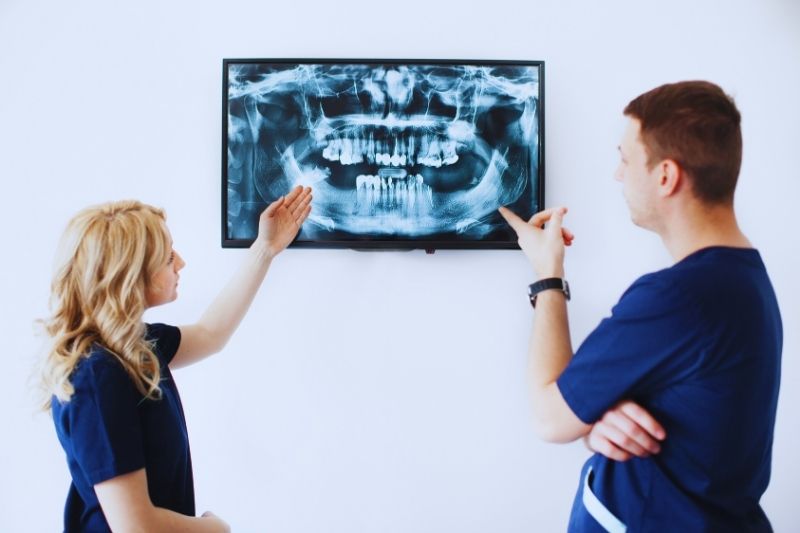
The AAO notes that panoramic X-rays can sometimes reveal information that is not visible during a basic oral examination, including the positions of developing or impacted teeth.
After the evaluation, parents may be told that:
- No orthodontic problem is currently present
- The child’s development should be monitored
- Treatment may be beneficial later
- Early orthodontic treatment may be appropriate
The recommendation depends on the individual child rather than age alone.
What Is Early Orthodontic Treatment?
Early orthodontic treatment—sometimes called interceptive orthodontic treatment—begins while some baby teeth remain.
It is not appropriate for every child.
When recommended, the purpose may be to address a specific developing problem while the jaws and dental structures are still growing.
The AAO explains that early treatment may sometimes help guide growth, improve certain bite relationships or create more favorable conditions for permanent teeth to erupt.
The important point is that age 7 is primarily an evaluation milestone, not a universal starting age for braces.
What Orthodontic Options Are Available?
Orthodontic treatment varies according to the condition being corrected.
Dental Aesthetics Professionals’ existing orthodontic service information includes both traditional metal braces and Invisalign clear aligners among available treatment approaches.
Traditional Braces
Traditional braces use brackets attached to the teeth and orthodontic wires to create controlled tooth movement.
The AAO notes that braces can be used for a broad range of bite and alignment concerns, including more complex malocclusions.
Clear Aligners
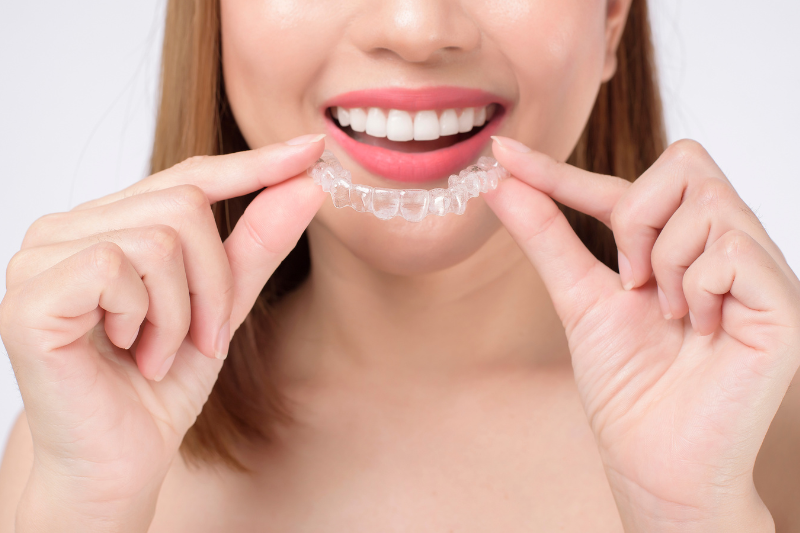
Clear aligners use a sequence of removable trays to move teeth gradually.
They can work well for selected orthodontic cases, but they are not automatically appropriate for every child or every bite problem.
The treatment method should therefore be selected after the teeth and bite have been evaluated rather than simply based on which appliance looks more appealing.
Can Adults Benefit From Orthodontic Treatment Too?
Yes.
Orthodontics is not limited to children and teenagers.
Adults may seek treatment because their teeth have shifted, because an orthodontic concern was never treated when they were younger or because they would simply like to improve their smile and bite.
The AAO states that adult orthodontic treatment can address a variety of tooth and jaw alignment concerns and that options may include braces and clear aligners.
Dental Aesthetics Professionals also offers orthodontic treatment for adults in Anaheim.
Why Should Teeth and Gums Be Healthy Before Orthodontic Treatment?
Orthodontic treatment moves teeth through the supporting bone, so good oral health is important.
Cavities, significant gum inflammation or other untreated dental problems may need attention before orthodontic treatment begins.
Maintaining excellent oral hygiene is also particularly important when wearing braces because plaque can accumulate around brackets and wires.
Patients using removable aligners still need consistent brushing and flossing because aligners fit closely over the teeth.
Regular dental examinations and professional cleanings should continue during orthodontic treatment.
How Long Does Orthodontic Treatment Take?
There is no standard treatment length for every patient.
Timing depends on factors such as:
- The type of alignment problem
- How much tooth movement is needed
- Jaw and dental development
- The appliance being used
- Patient cooperation
- How the teeth respond to treatment
A personalized estimate can only be provided after an evaluation and treatment plan.
Some children who receive an early evaluation may spend a period under observation before any active treatment is started.
When Should Anaheim Parents Schedule an Evaluation?
If your child is approaching age 7 and has never had an orthodontic evaluation, it may be an appropriate time to discuss dental development.
You should also consider an evaluation if you have noticed unusual tooth eruption, crowding, spacing, difficulty biting or another concern involving the way the teeth and jaws fit together.
An evaluation does not commit your child to braces. It provides information that can help you understand whether treatment is unnecessary, something to consider later or appropriate at the current stage of development.
Orthodontic Care in Anaheim, CA
Dental Aesthetics Professionals provides orthodontic services for children and adults in Anaheim, including traditional braces and clear aligner treatment when appropriate. The practice’s orthodontic approach includes evaluating tooth alignment, jaw development and bite concerns to determine suitable treatment options.
If your child is approaching the recommended age for an orthodontic evaluation—or you have questions about your own tooth alignment—you can learn more at Dental Aesthetics Professionals or call 714-772-3538 to schedule an evaluation.
Dental Aesthetics Professionals
1751 W. Romneya Drive, Suite-D
Anaheim, CA 92801
714-772-3538