Wisdom teeth do not always cause problems, but when they become impacted, grow at an angle, or contribute to pain and swelling, a dental evaluation can help determine whether removal is appropriate.
The American Dental Association explains that wisdom teeth, also called third molars, can become impacted when they are trapped beneath the gums or within the jaw because there is not enough room for them to erupt normally. Dentists generally monitor their position and look for signs of developing problems.
For additional patient information, visit the American Dental Association’s guide to wisdom teeth.
For patients considering wisdom tooth removal in Anaheim, understanding why these teeth sometimes cause problems and what happens during an evaluation can make the process easier to approach.
What Are Wisdom Teeth?
Wisdom teeth are the third set of molars located at the very back of the mouth.
They are typically the last permanent teeth to develop. Whether they erupt normally depends largely on the amount of available space and their position within the jaw.
Some people have wisdom teeth that emerge without creating significant problems. Others may have teeth that remain partially or completely trapped beneath the gums or jawbone.
The American Association of Oral and Maxillofacial Surgeons recommends evaluating third molars based on symptoms, position, surrounding tissues, and evidence of disease rather than relying on a one-size-fits-all approach.
What Does It Mean When a Wisdom Tooth Is Impacted?
An impacted wisdom tooth is unable to erupt normally into the mouth.
It may remain completely beneath the gum or emerge only partially.
A wisdom tooth can also grow at an angle toward another tooth rather than coming in vertically.
Your Dental Aesthetics Professionals service information specifically identifies impacted or angled wisdom teeth as concerns that may contribute to pain and other complications. The practice evaluates the position of wisdom teeth with dental X-rays before determining an appropriate treatment plan.
Signs Your Wisdom Teeth Should Be Evaluated
Not every symptom means that extraction is necessary, but certain changes around the back of the mouth deserve attention.
Pain Near the Back of the Jaw
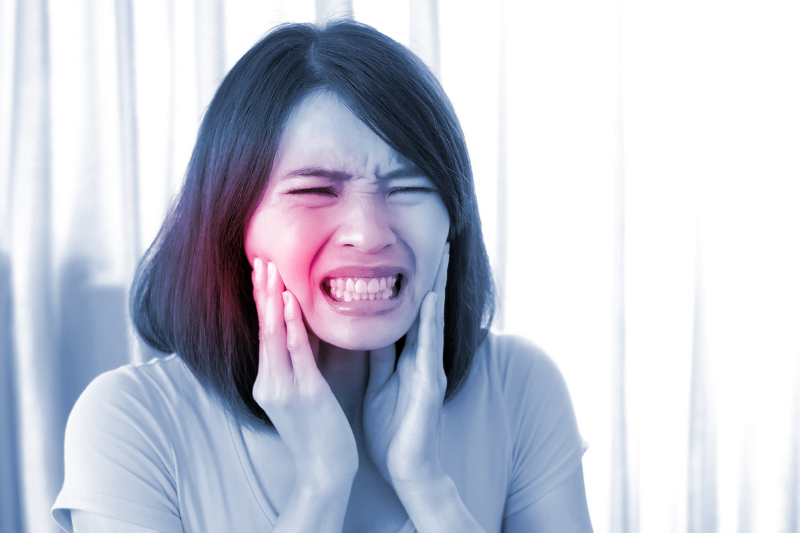
Pain around a wisdom tooth can occur when the tooth is erupting or when surrounding tissues become irritated.
Persistent pain should be evaluated rather than simply managed with over-the-counter pain relievers for an extended period.
Swelling Around the Gums
Partially erupted wisdom teeth can sometimes create areas where plaque and food debris are difficult to remove.
The ADA notes that wisdom teeth that do not have enough room or erupt in an unfavorable position can contribute to problems involving surrounding gum tissue and nearby teeth.
Difficulty Cleaning the Area
Wisdom teeth sit at the very back of the mouth, which can make brushing and cleaning around them challenging.
When a tooth is partially erupted or positioned awkwardly, maintaining good oral hygiene may become even more difficult.
Pressure or Discomfort Near Neighboring Teeth
A poorly positioned wisdom tooth may create discomfort in the surrounding area.
Your dentist can use an examination and X-rays to determine whether the wisdom tooth’s position is contributing to the problem.
Repeated Problems Around the Same Wisdom Tooth
Recurring inflammation, discomfort, decay, or other changes around a wisdom tooth can be reasons to consider treatment.
AAOMS guidance indicates that third molars associated with disease or significant risk of future problems may be candidates for treatment, while healthy, disease-free wisdom teeth may instead be monitored.
Does Every Wisdom Tooth Need to Be Removed?
No.
Having wisdom teeth does not automatically mean that they need to be extracted.
If a wisdom tooth is healthy, positioned appropriately, functioning normally, and can be cleaned effectively, your dentist may recommend continued observation instead of removal.
The decision should be based on an individual assessment of the tooth, including its position, symptoms, surrounding tissues, and potential risks.
Regular dental examinations allow your dentist to monitor wisdom teeth for changes over time.
Why Are Dental X-Rays Important?
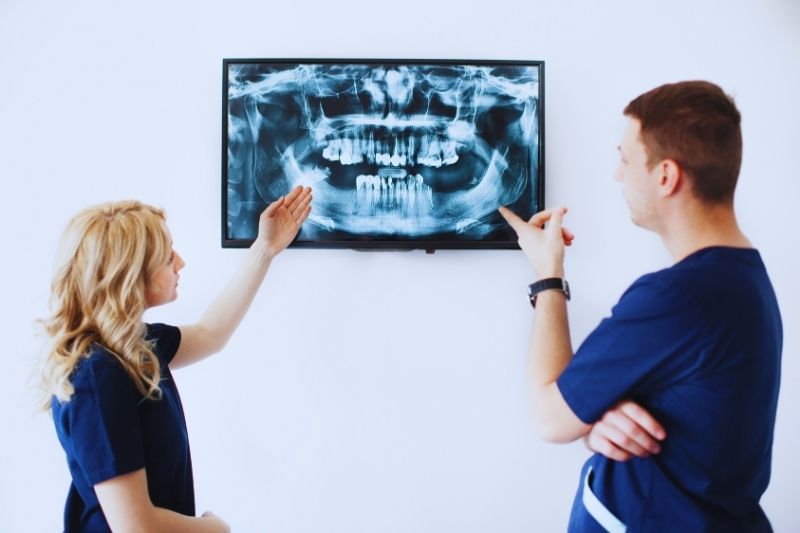
A large portion of an impacted wisdom tooth may be hidden beneath the gums and cannot be fully evaluated simply by looking inside the mouth.
Dental X-rays allow the dentist to examine:
- The position of the wisdom tooth
- Whether it is impacted
- Its relationship to neighboring teeth
- The surrounding jawbone
- Developing dental concerns
Dental Aesthetics Professionals’ wisdom tooth removal process includes taking an X-ray to evaluate the position and condition of the teeth before extraction is considered.
This information helps your dentist determine whether monitoring or removal is the more appropriate approach.
What Happens During Wisdom Tooth Removal?
The exact procedure varies according to the position of the tooth and whether it has fully erupted.
For a straightforward extraction, the dentist removes the tooth after adequately numbing the treatment area.
An impacted tooth may require a more involved procedure because some or all of the tooth remains beneath the gum or bone.
Dental Aesthetics Professionals notes that local anesthesia is used to numb the area and help keep patients comfortable during wisdom tooth extraction.
Your dentist will explain the planned procedure before treatment based on what is seen during the examination and on dental imaging.
What Should You Expect After an Extraction?
Some tenderness and swelling can occur following wisdom tooth removal.
Recovery varies according to factors such as the number of teeth removed and the complexity of the extraction.
Following your dental team’s postoperative instructions is important.
These instructions may cover how to keep the area clean, what foods to choose temporarily, and when to return for follow-up care.
Contact the dental office if symptoms appear unusual or worsen instead of gradually improving.
Is It Better to Remove Wisdom Teeth Earlier?
There is no single age at which every person should have their wisdom teeth removed.
Instead, timing depends on how the teeth are developing and whether they are creating or are likely to create dental problems.
Dental Aesthetics Professionals’ service information notes that troublesome wisdom teeth can be removed at different ages and emphasizes evaluation when pain, discomfort, swelling, or impaction is present.
AAOMS similarly recommends evaluating third molars by young adulthood so their position, development, and health can be assessed.
What If Your Wisdom Teeth Are Not Hurting?
The absence of pain does not necessarily tell you everything about a wisdom tooth.
Because some third molars remain beneath the gums, your dentist may identify their position during routine examinations or dental X-rays before you notice symptoms.
That does not automatically mean extraction is required.
Instead, your dentist can determine whether the tooth is healthy enough to monitor or whether there are clinical reasons to consider removal.
When Should You Contact a Dentist?
Consider scheduling an examination if you notice persistent discomfort around the back of your mouth, swelling, difficulty cleaning around a wisdom tooth, or other changes that concern you.
Prompt evaluation is particularly helpful when symptoms keep returning.
A dentist can determine whether the wisdom tooth is actually responsible for your symptoms and discuss appropriate treatment rather than assuming extraction is necessary.
Wisdom Tooth Removal in Anaheim, CA
Dental Aesthetics Professionals evaluates wisdom teeth for patients experiencing pain, discomfort, swelling, impaction, or concerns about how their third molars are developing. The practice uses dental imaging to assess wisdom tooth position before recommending treatment.
If your wisdom teeth are bothering you, an examination can help determine whether they should be monitored or removed without assuming that every wisdom tooth requires extraction.
Learn more or schedule a visit through Dental Aesthetics Professionals, or call 714-772-3538.
Dental Aesthetics Professionals
1751 W. Romneya Drive, Suite-D
Anaheim, CA 92801