Introduction
Losing a tooth can be a life-changing experience, whether it happens because of tooth decay, gum disease, injury, or another dental condition. While some people focus mainly on the appearance of a missing tooth, the effects often extend far beyond aesthetics. Even a single missing tooth can affect your ability to chew, speak, maintain proper bite alignment, and preserve the health of your jawbone.
Many people delay replacing missing teeth if the gap is not visible or doesn’t cause immediate discomfort. However, leaving an empty space in your smile can lead to a series of oral health problems over time. Fortunately, modern dentistry offers several effective tooth replacement options that restore both function and appearance.
Understanding why replacing missing teeth is important can help you make informed decisions that support your long-term oral health.
The Impact of Missing Teeth on Your Oral Health
Every tooth plays an important role in maintaining the structure and function of your mouth. When a tooth is lost, the surrounding teeth and supporting bone begin to change.
Without the natural support of a tooth, neighboring teeth may gradually shift into the empty space. This movement can affect your bite, create alignment issues, and make it more difficult to clean between your teeth.
The longer a missing tooth remains untreated, the greater the chance of developing additional dental problems.
Difficulty Chewing Your Favorite Foods
Your teeth are designed to work together during chewing. Missing even one tooth can reduce your ability to bite and chew efficiently.
Some people begin avoiding foods that are:
- Crunchy
- Tough
- Sticky
- Chewy
As a result, they may limit nutritious foods such as fresh fruits, vegetables, and lean meats, which can affect both oral health and overall wellness.
Replacing missing teeth restores chewing function and allows you to enjoy a more balanced diet.
Changes in Speech
Your teeth help guide airflow and tongue movement when speaking.
Missing front teeth, in particular, may affect the pronunciation of certain words and sounds.
Some individuals notice:
- Slurred speech
- Whistling sounds
- Difficulty pronouncing certain letters
Replacing missing teeth often improves speech clarity and confidence during conversations.
Jawbone Loss After Tooth Loss
One of the most significant consequences of losing a tooth is bone loss.
The roots of natural teeth stimulate the jawbone whenever you bite or chew. Once a tooth is lost, that stimulation disappears, causing the surrounding bone to gradually shrink.
Over time, bone loss may:
- Change facial appearance
- Reduce jawbone density
- Affect neighboring teeth
- Make future dental treatment more complex
Replacing missing teeth promptly helps preserve bone structure and maintain facial support.
Teeth Can Shift Out of Position
Teeth naturally move toward open spaces in the mouth.
When a tooth is missing, nearby teeth may gradually drift into the gap.
This shifting can lead to:
- Crooked teeth
- Bite problems
- Uneven tooth wear
- Difficulty flossing
- Increased plaque buildup
These changes may eventually require orthodontic treatment or additional restorative procedures.
Replacing missing teeth helps maintain proper alignment.
Increased Wear on Remaining Teeth
When one tooth is missing, the remaining teeth often work harder during chewing.
The additional pressure placed on these teeth may increase the risk of:
- Chipped teeth
- Cracked teeth
- Worn enamel
- Tooth sensitivity
- Broken dental restorations
Replacing the missing tooth helps distribute biting forces more evenly across your smile.
Tooth Replacement Options
Modern dentistry offers several solutions for replacing missing teeth. Your dentist will recommend the most appropriate option based on your oral health, budget, and personal goals.
Dental Implants
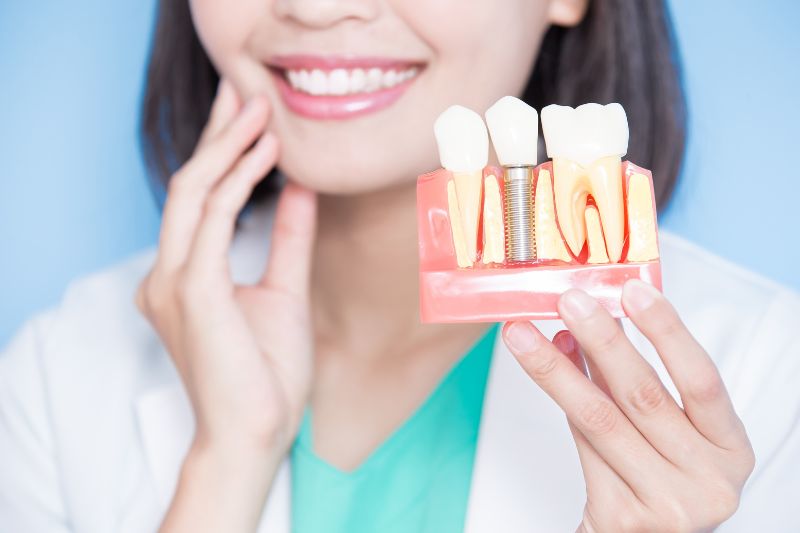
Dental implants are considered one of the most reliable long-term tooth replacement options.
An implant replaces both the tooth root and the visible crown, creating a restoration that closely resembles a natural tooth.
Benefits include:
- Natural appearance
- Excellent stability
- Long-lasting results
- Improved chewing ability
- Preservation of jawbone
With proper care, dental implants can last for many years.
Dental Bridges
A dental bridge fills the gap by attaching an artificial tooth to neighboring natural teeth or implants.
Bridges restore appearance and chewing function while preventing nearby teeth from shifting.
Many patients appreciate bridges because they provide a fixed solution without requiring removal for cleaning.
Partial Dentures
Partial dentures replace one or several missing teeth.
Modern partial dentures are lighter, more comfortable, and more natural-looking than older designs.
They provide an affordable option for many patients who are not candidates for implants.
Complete Dentures
Patients missing all of their natural teeth may benefit from complete dentures.
Today’s dentures are custom-made to improve comfort, restore appearance, and support better chewing and speaking.
Implant-supported dentures may also provide additional stability for eligible patients.
Benefits of Replacing Missing Teeth
Replacing missing teeth provides many important advantages beyond restoring your smile.
Treatment can help:
- Improve chewing efficiency
- Restore speech clarity
- Preserve jawbone health
- Prevent neighboring teeth from shifting
- Support facial structure
- Improve bite alignment
- Increase confidence
- Enhance overall quality of life
Many patients report greater comfort and improved self-esteem after restoring their smiles.
Caring for Your Replacement Teeth
Proper maintenance helps maximize the lifespan of your restoration.
Your dentist may recommend:
- Brushing twice daily
- Flossing around restorations
- Using non-abrasive toothpaste
- Attending regular dental checkups
- Avoiding chewing on hard objects
- Wearing a mouthguard during sports
Good oral hygiene protects both your replacement teeth and your remaining natural teeth.
When Should You Replace a Missing Tooth?
Although every situation is unique, replacing a missing tooth sooner rather than later often provides the best long-term outcome.
Early treatment can:
- Reduce bone loss
- Preserve proper tooth alignment
- Maintain chewing function
- Simplify future treatment
- Protect neighboring teeth
Delaying treatment may limit your options and increase the complexity of future dental care.
Conclusion
Missing teeth affect much more than the appearance of your smile. They can influence how you eat, speak, and care for your oral health while increasing the risk of bone loss, shifting teeth, and bite problems.
Fortunately, modern restorative dentistry offers effective solutions for replacing missing teeth and restoring both function and confidence. Whether you’re missing one tooth or several, discussing your options with your dentist is an important step toward protecting your long-term oral health.
Call to Action
A complete smile supports better oral health and greater confidence. Schedule a consultation today to explore your tooth replacement options and find the solution that’s right for your needs.